Living Near an Austrian Border: The Everyday Reality of “Commuter Regions”
In places like Nickelsdorf or Kufstein, the “nearest city” might be abroad. Here’s how border life shapes jobs, shopping, housing, and even postal habits.
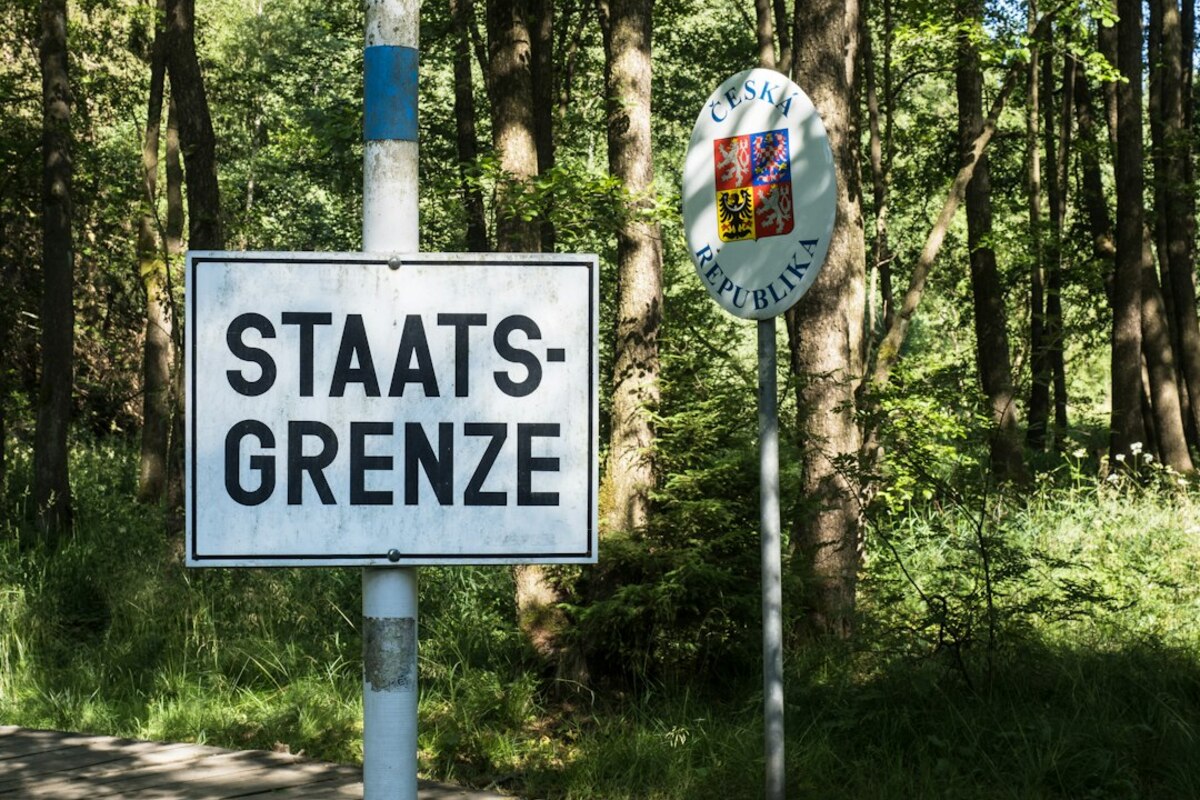
- Many Austrian border towns function like one shared metro area with the neighboring country—commuting and errands routinely cross borders.
- Cross-border life affects everyday decisions: where you work, shop, see a doctor, and how housing prices change.
- Knowing the local “border rhythm” (peak traffic times, school runs, holiday differences) can save time, money, and stress.
When “the next city” is in another country
Imagine you live in eastern Burgenland. Your workplace is 25 minutes away—but it’s not in Austria. Your favorite supermarket is across the border. Your football club plays friendly matches with teams from the neighboring region. None of this feels exotic. It’s just Tuesday.
That’s the day-to-day reality in many Austrian border areas. While tourists often see borders as lines to cross for a weekend trip, locals in places near Germany, Switzerland, Italy, Slovenia, the Czech Republic, Slovakia, and Hungary often live inside what feels like one shared “commuter region.” The border is still there—of course it is—but for work, shopping, and routines it can behave more like a speed bump than a wall.
These regions are especially easy to spot on a map: towns with a motorway exit that points straight to another country, rail lines where the next major station is across the border, or valleys and basins where the natural direction of travel goes toward the nearest city—even if that city is not Austrian.
For a project focused on postal codes and place knowledge, this is more than an interesting geographic detail. Border commuting influences where people move, which towns grow faster, how traffic flows, and even which services locals expect nearby. In other words: the region’s “postal reality” is shaped by cross-border habits.

The practical stuff: work, shopping, school runs, and traffic
Border life becomes most visible in the boring, practical questions people ask every week:
- Where can I earn the best salary for my skills?
- Where do I find childcare that fits my hours?
- Where is the nearest hospital or specialist?
- Which direction do I drive when I need a DIY store on Saturday?
In border commuter regions, the answers are often mixed. Someone may live in Austria, work in another country, shop in both, and keep social life mostly local. That mix can change quickly depending on exchange rates, fuel prices, tolls, or new transport links.
A relatable scenario: A graphic designer living near the German border gets a better-paying job in Bavaria. The commute is fine, but suddenly their daily rhythm shifts: they leave earlier to avoid a border bottleneck, fill up the car where fuel is cheaper this month, and learn that public holidays don’t always match—so the “quiet day” in one country can be a normal workday in the other.
These commuter flows aren’t only about individual choices. They shape entire towns:
- Morning and evening traffic patterns can be dominated by cross-border routes. A town might feel calm at midday and overloaded at 7:30 a.m.
- Local retail feels the pressure when residents do big shopping trips abroad (or vice versa). Some shops adapt by specializing; others focus on convenience.
- Service demand can rise in specific sectors—like parking, quick food options near transit corridors, or childcare matching cross-border work schedules.
Not every border region works the same way. The “magnet” can be a large city (think of areas influenced by Munich, Bratislava, or Salzburg’s cross-border surroundings), or it can be a cluster of medium-sized towns that function like one labor market. Sometimes it’s not even about size—it’s about proximity and travel time. If the nearest big employer is across the border, that’s where people go.
Typical border-commuter motivations (in plain language):
| Everyday goal | Why the border matters | What people actually do |
|---|---|---|
| Better pay or more job options | Wages and job availability can differ sharply over short distances | Live in Austria, work across the border, commute daily or 2–3 times/week |
| Cheaper shopping | Prices shift with competition, taxes, and exchange rates | Do “big basket” shopping where it’s cheaper; use local shops for top-ups |
| Faster access to services | The closest hospital or specialist might be in the neighboring region | Choose appointments based on travel time, not national borders |
| More housing choices | Demand rises near commuter corridors; supply differs by municipality | Move to towns with good connections—sometimes triggering price pressure |
That last point—housing—often becomes the most emotionally charged. When more people can reach a well-paying job market quickly, demand for housing in “well-connected” towns increases. Locals may feel squeezed by rising rents or property prices, while newcomers feel they’ve found the only affordable place near their job hub. This is where regional identity, politics, and practical life collide.
What changes for postal habits, deliveries, and “where you say you’re from”
Postal codes are about more than mail. They’re also a mental map: how people organize places in their heads. Border commuter regions create a funny effect—people’s daily geography doesn’t always match their national geography.
For example, someone might describe their location like this: “I live near the border, about 15 minutes from that city.” And “that city” might be abroad, because it’s the reference point everyone knows: the place with the bigger station, the big mall, the university, the airport, or the specialized clinic.
That affects everyday postal and delivery behavior in subtle ways:
- Pickup points and parcel lockers: People choose pickup locations based on commuting routes. If you pass a parcel locker on the way home from abroad, that’s the practical option—even if another exists closer to your house.
- Address clarity: In border regions, there can be repeated place names across countries (or very similar spellings). That makes correct ZIP/postal code use more important—especially for online forms and deliveries.
- Shopping patterns: When people split shopping between two countries, deliveries become a strategy decision: deliver to home, to work, or to a pickup station along the commute?
And then there’s identity—how people talk about “their region.” A border town can feel culturally Austrian, administratively Austrian, but economically connected to a neighboring region. Someone might cheer for an Austrian club and still track traffic news from a city across the border because it determines whether they’ll be late for work.
In everyday language, you’ll hear this as a kind of practical shorthand: “I’m basically in the area of [nearby foreign city].” It’s not a political statement. It’s just a way to communicate what matters in daily life: travel time, job access, and where you run errands.
No. Borders still matter for taxes, health insurance rules, school systems, vehicle regulations, and public holidays. But for many routines—driving to work, buying groceries, visiting friends—the border feels less like a stop and more like a sign on the road.
No. Borders still matter for taxes, health insurance rules, school systems, vehicle regulations, and public holidays. But for many routines—driving to work, buying groceries, visiting friends—the border feels less like a stop and more like a sign on the road.
Because they sit on a commuter corridor. A small town with a key crossing, a motorway junction, or a rail link can handle traffic and daily movement far beyond what its population suggests.
Because they sit on a commuter corridor. A small town with a key crossing, a motorway junction, or a rail link can handle traffic and daily movement far beyond what its population suggests.
Look at the everyday direction of travel: where do people drive in the morning, and where do they go for big errands on weekends? The strongest pull often reveals the real functional center—sometimes on the other side of the border.
Look at the everyday direction of travel: where do people drive in the morning, and where do they go for big errands on weekends? The strongest pull often reveals the real functional center—sometimes on the other side of the border.
All of this is why border regions tend to be full of small, practical expertise. Locals become experts in “time windows” (when to avoid traffic), “smart routes” (which crossing is fastest), and “calendar mismatches” (when one side is on holiday and the other isn’t). It’s not academic knowledge—it’s the kind of know-how you gain when your daily life spans two systems.
And it’s also why these regions stay a hot topic: they’re living proof that regions aren’t only defined by lines on a map. They’re defined by commuting time, habit, opportunity, and the simple human desire to make everyday life easier—even if that means your routine crosses a national border before your first coffee break.