Delivery Instructions That Actually Work: What to Write (and What Not to) for Your Address
A good delivery note can mean “left safely” instead of “missed you.” Learn what couriers can use, what confuses them, and copy‑paste examples that work.
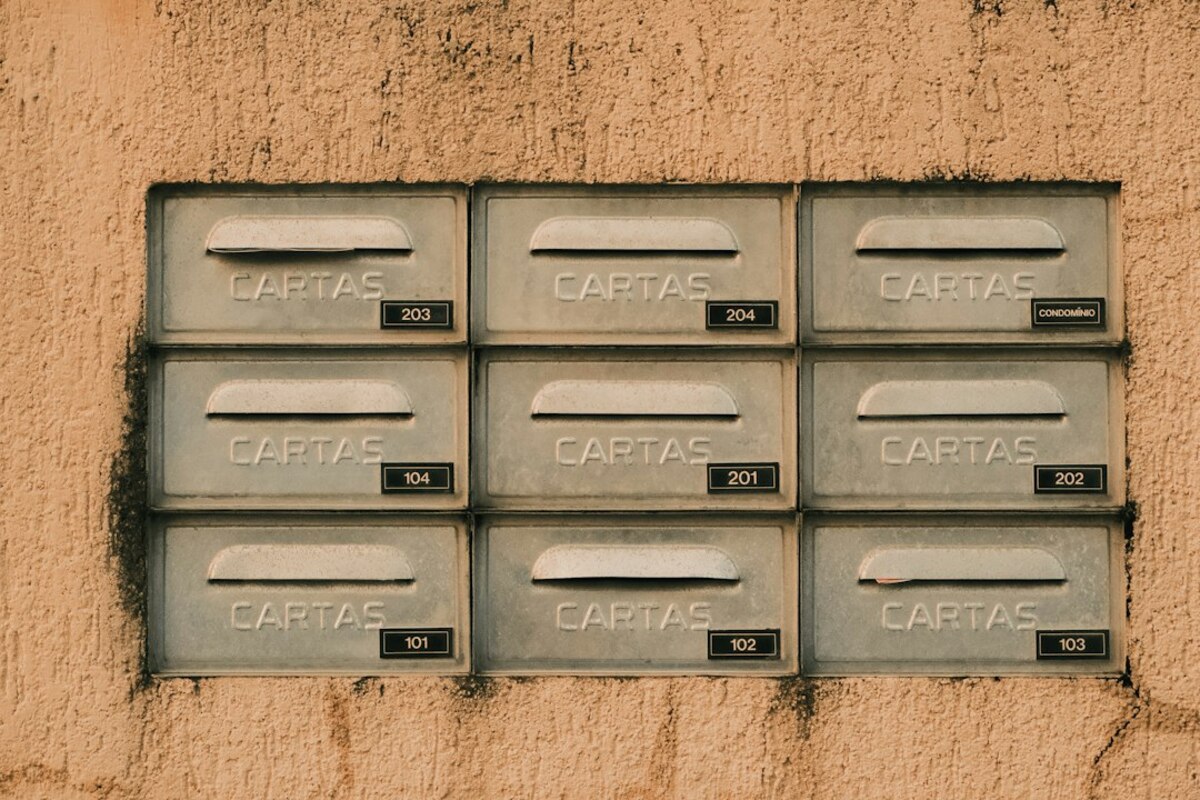
- Good instructions are short, specific, and easy to spot from the street or staircase
- Avoid vague notes like “behind the house” unless you add a clear landmark and permission
- Use proven templates for apartments, businesses, and hard-to-find entrances
Why delivery notes matter more than people think
You can have a perfect postcode, street name, and house number—and still end up with a failed delivery. Often, the weak link isn’t the address itself but the last 20 meters: the doorbell, the staircase, the side entrance, the office reception, or the confusing courtyard that looks like private property.
Delivery instructions (sometimes called “notes,” “comments,” or “additional address information”) are the small text field that can save a driver time and save you a second delivery attempt. And that’s exactly why they work best when they’re fast to read and actionable in seconds.
Imagine a driver with 120 stops. They can’t solve a riddle like “Ring upstairs, I’m in the back building, second door, you know.” They can follow something like: “Entrance B (right side), 3rd floor, bell ‘Kaya’.”
In practice, good notes do three things:
- Confirm they’re at the right place (which entrance? which building?)
- Tell them what to do next (which bell? which office? where to leave it?)
- Remove hesitation (permission to leave it, or a clear alternative like a neighbor)

What makes an instruction “usable” in real life
The best delivery instructions are like a good street sign: short, unambiguous, and written from the driver’s perspective. If you write like you’re giving directions to a friend who has never been there—using visible landmarks—you’re on the right track.
Use this simple formula:
- Where (entrance/building/floor)
- How to identify (name on bell, company name, color/landmark)
- What to do (ring which bell, leave where, contact method)
Here’s a quick “good vs. bad” overview you can copy as a checklist.
| Instead of… | Write… | Why it works |
|---|---|---|
| “Please call me.” | “If no answer: leave at reception (Mon–Fri 08:00–16:00).” | Many drivers can’t call every stop; a clear fallback saves time. |
| “Back building.” | “Courtyard building, entrance behind the bakery sign; bell ‘Mayer’.” | Adds a visible landmark and a precise identifier. |
| “Ring neighbor.” | “If I’m not home: ring Apt 4 (Schmidt) — ok to hand over.” | Specifies exactly who and confirms permission. |
| “Leave behind the house.” | “If allowed: place parcel in gray box labeled ‘Parcel’ next to door mat.” | Reduces searching and makes the drop spot obvious. |
| “My office is upstairs.” | “Company ‘Nova IT’, 2nd floor, door sign ‘Support’.” | Gives the label the driver will actually see. |
One important mindset shift: your instruction competes with everything else happening at the stop—traffic, parking, weather, locked doors, intercoms, other deliveries. The note has to be readable in under five seconds.
Keep it short. If your note is a paragraph, it will be skimmed—or ignored. If you need multiple details, use short phrases separated by semicolons, for example: “Entrance B; 3rd floor; bell ‘Nguyen’; leave at reception if no answer.”
Avoid “hidden knowledge.” Things like “the usual place,” “as always,” “you know where,” or “same as last time” fail because:
- Different driver today
- Different delivery company today
- Different rules for different parcel types
Be careful with security and privacy. Delivery notes may be visible to multiple people in a logistics chain. Avoid sharing sensitive details such as door codes, alarm codes, or “key is under the mat.” If access requires a code, use official building solutions (reception, parcel lockers, authorized drop permissions) rather than sharing secrets in a note.
Use “visual truth.” The best identifying information is whatever is physically printed on the building: the name on the bell, the company sign, the entrance letter, the floor number, the staircase label. If your note references something invisible (“my name is on the second sticker”) it’s risky.
Copy-and-paste examples for common living and work situations
Below are ready-to-use templates. Adapt them to match what a driver can really see. The idea is to remove uncertainty, not to write a story.
- Apartment building (multiple entrances):
“Entrance B (right side of courtyard); 3rd floor; bell ‘Hoffmann’.” - Apartment with confusing bell name:
“Bell shows ‘H. Novak’ (not full name). Apt 12.” - Side entrance / rear door:
“Use side entrance on Linden St; door sign ‘Staircase 2’; bell ‘Patel’.” - Office delivery in a shared building:
“Company ‘Kern Studio’; 4th floor; reception desk until 17:00.” - Business closed at midday:
“Closed 12:00–13:00. Please deliver before 12:00 or after 13:00; reception accepts parcels.” - Workshop / warehouse on same address:
“Deliver to loading gate at rear (sign ‘Warenannahme’). Ring bell ‘Goods In’.” - Rural house with hard-to-see number:
“House is 2nd after the bridge; green fence; number plate on mailbox.” - Temporary delivery to a friend/relative:
“Ring ‘S. Berger’; OK to hand over to household member.”
Real-life scenario: You live in a building with two staircases. Your address is correct, but drivers regularly try Staircase A because it’s the first door from the street. The fix is not “please don’t.” The fix is: “Staircase B (door next to bike rack); bell ‘Özdemir’.” Suddenly the driver has a physical landmark (bike rack) and a clear action (ring bell name).
What not to put in notes (even if it feels helpful):
- Door codes, key locations, alarm info (privacy + security risk)
- Long personal schedules (“I’m in meetings until 14:30, then school pickup…”)—use a fallback instead
- Emotional instructions (“PLEASE DON’T …!!!”)—they don’t add clarity
- Too many options (“If I’m not home, try neighbor A, then B, then call me, then…”)
Only if the shop/carrier asks for it and you’re comfortable sharing it. Many systems already store your number separately. If you include it, keep it minimal (“Call if gate is locked”) and add a non-call fallback (neighbor, reception, or reschedule).
Only if the shop/carrier asks for it and you’re comfortable sharing it. Many systems already store your number separately. If you include it, keep it minimal (“Call if gate is locked”) and add a non-call fallback (neighbor, reception, or reschedule).
You can ask, but whether it’s allowed depends on the delivery company, parcel value, signature requirements, and local rules. If you do, make the spot easy to find and clearly described (“gray parcel box by front door”). Avoid hidden or risky locations.
You can ask, but whether it’s allowed depends on the delivery company, parcel value, signature requirements, and local rules. If you do, make the spot easy to find and clearly described (“gray parcel box by front door”). Avoid hidden or risky locations.
Use whatever is visible: the exact bell label, floor, apartment number, staircase letter, or a landmark at the correct entrance. Also consider updating the bell label—small fixes like that often reduce failed deliveries more than any note.
Use whatever is visible: the exact bell label, floor, apartment number, staircase letter, or a landmark at the correct entrance. Also consider updating the bell label—small fixes like that often reduce failed deliveries more than any note.
A final practical tip: Treat your delivery instruction like a sticky note on a door: if it can’t be understood instantly by someone who has never been there, rewrite it. Replace vague words (back, left, usual, near) with something that can be verified with the eyes (entrance letter, sign name, visible object, floor).
If you order to different places (home, office, partner’s place), consider saving separate “instruction templates” in your notes app. Then you can paste the right one each time and only adjust details like the bell name.