Why Your Street Can Have Two Postcodes: The Hidden Logic Behind Austrian PLZ Borders
Ever seen two different postcodes for the same street? In Austria it happens more often than you think—here’s why PLZ borders cut through daily life.
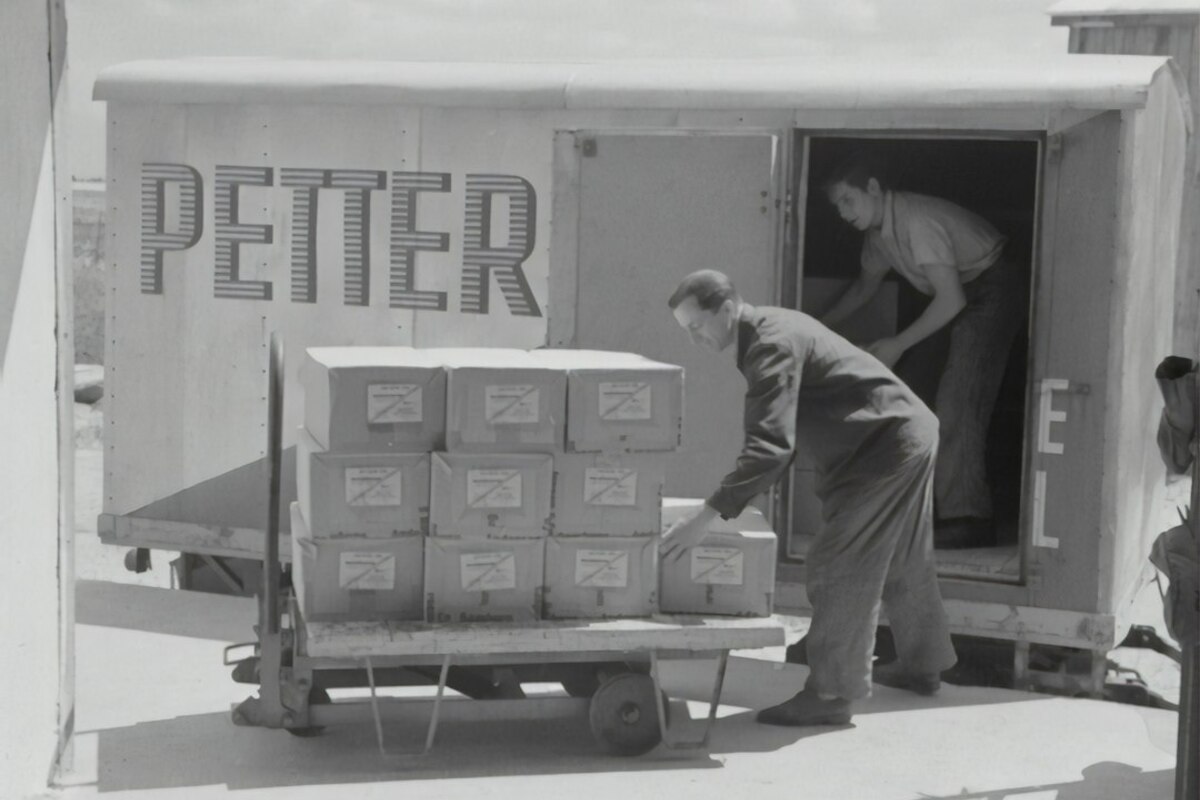
- Austrian postcode borders follow delivery routes and logistics—not always neat town or district lines
- Long streets, new housing areas, and big buildings can end up with different PLZ options
- Using the “right” PLZ can affect delivery speed, service availability, and even which office you’re assigned to
That moment: “But… we live on the same street.”
You’re on the phone with customer support. You give your address. The agent reads it back and adds a different postcode than the one you’ve used for years.
Street name: correct. House number: correct. City: correct. But the postcode? Suddenly up for debate.
This isn’t just a quirky database mistake. In Austria, it’s completely possible that:
one long street has two postcodes, depending on the house number,
a building complex uses a different PLZ than the surrounding neighborhood,
a “logical” PLZ (based on municipality) differs from the “postal” PLZ (based on delivery routes).
To understand why, it helps to stop thinking of postcodes as “administrative labels” and start thinking of them as instructions for movement: who delivers where, from which depot, in which sequence, with which vehicles.

Postcodes are not borders on a map—they’re shortcuts for delivery routes
A common assumption is that postcodes are designed like clean puzzle pieces that match political boundaries: districts, municipalities, or neighborhoods. That’s how it feels when a PLZ is mentioned on websites and forms—like a stable “area code” for your address.
But the everyday reality of postal work is more practical. Postcodes primarily support:
sorting (which center, which route, which bundle),
distribution (which delivery team is responsible),
efficiency (shorter driving, fewer detours, balanced workloads).
That means PLZ lines often follow the logic of how mail and parcels flow, not how people would draw borders.
Think of it like a public transport network: two houses may be 200 meters apart, but if one is naturally served by “Bus Line A” and the other by “Bus Line B,” they end up in different operational systems. A postcode can work similarly—an operational label that says: “Send this to the team that runs this route.”
Here are the most common reasons one street can have more than one postcode:
Long roads can behave like “mini-highways” through different settlement areas. One end might be best served from one delivery base, the other end from another—especially if the road connects two towns or two dense neighborhoods.
So the street name stays the same, but the postcode changes by house number ranges (e.g., 1–79 vs. 80–160), because it’s the simplest way to keep delivery routes efficient.
When a new residential area is built at the edge of an existing postcode area, it might initially be assigned to the nearest practical delivery route—even if it “feels” like it belongs to the neighboring PLZ on a map.
Over time, the delivery structure may change (more households, more parcels, different vehicle access), and the assigned PLZ can be adjusted. During these transitions, you’ll often see multiple “acceptable” PLZ options floating around in systems.
Large apartment complexes, hospitals, industrial parks, or office campuses can receive such a high volume of deliveries that routing them through a “standard neighborhood flow” becomes inefficient.
In some cases, the complex ends up associated with a different postcode or a special internal routing rule—leading to the odd situation where the building’s official PLZ differs from the PLZ used by nearby houses.
None of these reasons are “errors.” They’re basically logistics saying: “This is how we keep the system moving.”
Real-life scenarios: where two postcodes actually matter
If postcodes were only a cosmetic label, it wouldn’t matter much. But in daily life, the postcode is often treated like a decision switch—a fast filter used by systems and humans. When your street can take more than one PLZ, small differences can show up.
Here are a few everyday scenarios where it becomes visible:
| Scenario | What happens | Why the PLZ matters |
|---|---|---|
| Online shopping checkout | The form auto-fills a city/PLZ combo you don’t use | Many shops validate addresses using PLZ databases; the “other” PLZ might be the one the database prefers |
| Parcel delivery instructions | A drop-off point or route appears “wrong” for your area | Routing software often groups deliveries by postcode; a different PLZ can shift the parcel to another sequence |
| Service availability checks | Internet, delivery subscriptions, or on-demand services show different offers | Providers sometimes map service zones by postcode first, then refine by address |
| Appointments & on-site visits | A technician is scheduled from an unexpected branch | Companies use PLZ clusters to assign teams; a border PLZ can place you in another cluster |
| Workplace admin | HR or payroll tools suggest a different municipality for your address | Some systems infer locations from PLZ—helpful, but imperfect near borders |
Notice the pattern: even when humans understand your address perfectly, software loves shortcuts. And the postcode is one of the biggest shortcuts of all.
Now imagine a very normal situation:
You move into a newly built apartment at the end of a long road.
Your neighbors across the street use a different PLZ.
Your bank form rejects your PLZ-city combination.
The delivery driver calls because the navigation app “thinks” your postcode is in the next town.
This is the “postcode border zone” experience in a nutshell: everything is close-by in real life, but split in the logic of routing and databases.
How to figure out which PLZ is the “right” one for your exact address
If you suspect your street has two possible postcodes, the goal isn’t to win an argument about which one is “more correct.” The goal is to find the PLZ that is assigned to your specific house number in postal addressing.
Here’s a practical, non-expert checklist you can use—especially useful when filling out important forms or ordering something expensive:
Check by house number, not just street name. Many border cases switch exactly at a certain number range.
Look at multiple “official-looking” sources. A municipality website, a postal lookup, and a map-based address tool may disagree during changes.
Prefer the version used on your mailbox/doorbell and by your immediate neighbors in the same building. In multi-unit buildings, consistency helps deliveries.
If a form rejects your entry, don’t assume you’re wrong. It can be the form’s database. Try the alternative PLZ that still matches your street and city, or search your address as the website expects it.
For recurring deliveries, save the “working” address version. Use the same spelling, same PLZ, and same formatting each time (including stair/floor/door if used).
Also helpful: treat the postcode like a routing hint. If your parcels keep getting delayed or repeatedly end up in the “wrong” pickup shop, testing the alternative PLZ (while keeping street and number correct) can sometimes align the shipment with the route that actually serves your door.
One more everyday analogy: if your address is a song, the street and house number are the melody—and the postcode is the playlist category. The song stays the same, but the category changes which system picks it up first.
Because postcode borders are built around movement and workload, not aesthetics, they can look strange on a map. But once you see them as delivery routes rather than political boundaries, the weirdness turns into a kind of hidden logic—one that quietly shapes how fast things reach you.