Why Some Austrian Villages Still Use “Hausnummern” Instead of Street Names
In parts of Austria, an address can be just a village name plus a number. Here’s how that system works—and why it’s still practical today.
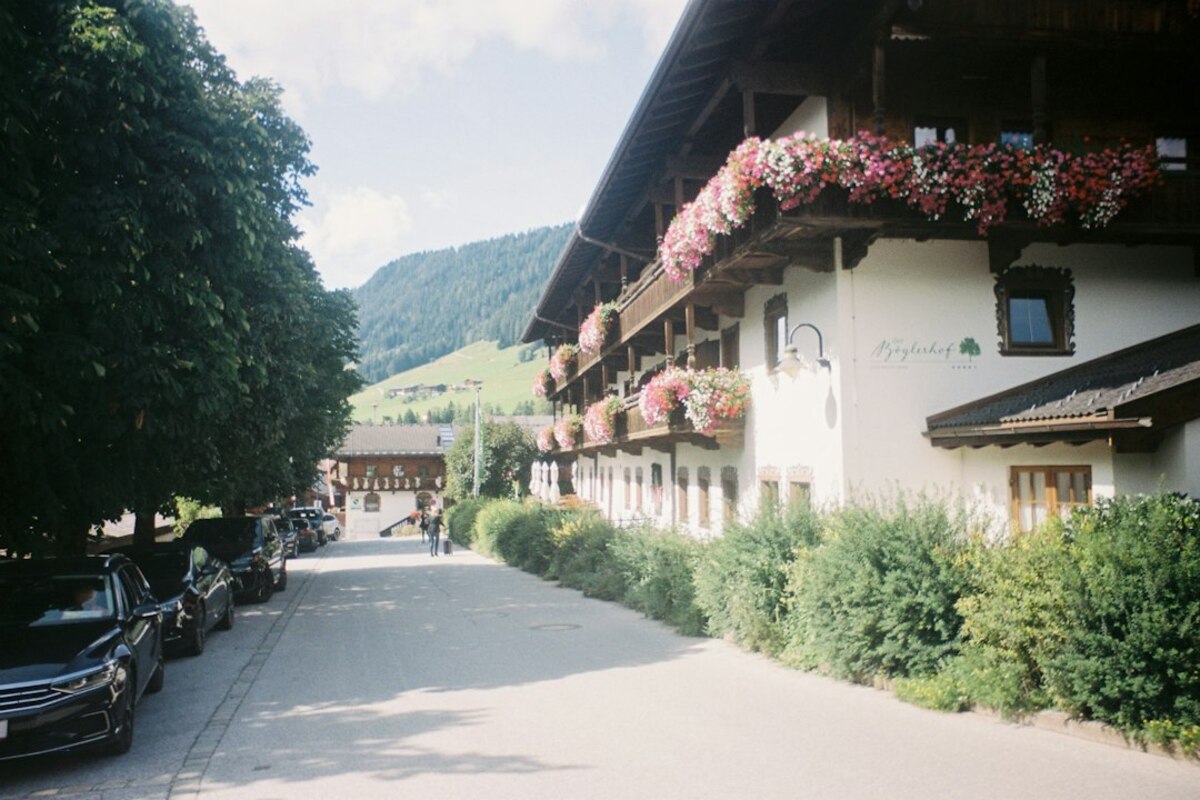
- “Ortschaft + Hausnummer” is a traditional addressing system still used in many rural areas—and it can be perfectly official.
- It affects deliveries, navigation apps, emergency calls, and registration forms in very specific ways.
- If you move there, knowing how to write (and search) your address correctly saves time and missed parcels.
A delivery driver’s puzzle: “No street, just a number”
Imagine you’ve ordered a new phone case. The tracking link says: “Out for delivery.” Then you get a call: “Hi, I’m at the village, but… there’s no street on your label. Where exactly is ‘Oberdorf 12’?”
If you live in a big city, that sounds like a mistake. In many parts of rural Austria, it isn’t. Some places still use an older, very down-to-earth address format: the name of the Ortschaft (settlement/village) plus a house number. No street name required. Something like:
- Oberdorf 12
- Untergassen 4
- Maria Laach 27
To outsiders this can feel confusing—especially when you’re trying to find the right building quickly. But the system has its own logic, and once you understand it, it can be surprisingly simple.
It also explains why two neighbors might have completely different “numbers,” why a newly built house can end up with a high number, and why your navigation app sometimes insists on sending you to the center of a village instead of your front door.

How “Ortschaft + Hausnummer” actually works (and why it exists)
Street names are a practical invention for dense places: you need a clear grid so people, mail, and emergency services can locate one building among thousands. But many Austrian villages didn’t grow as neat street networks. They grew as clusters: a few farms here, a few houses there, buildings added over decades along paths that locals simply knew.
So instead of naming every lane, communities historically assigned house numbers to buildings in the settlement. That number is tied to the building (or property) within that Ortschaft—not necessarily to its position along a street.
That’s why you might see a sequence like 3, 7, 12, 25… along the same road. It’s not counting doors as you walk. It’s reflecting a numbering scheme created at a particular moment in time, then extended as new buildings appeared.
Two key ideas help it make sense:
- The “place name” matters. The house number is only unique within its settlement name. “Dorf 12” in one municipality is not the same as “Dorf 12” elsewhere.
- The number is often historical, not linear. It might follow old administrative numbering, not today’s geography.
For everyday life, this can be perfectly fine if everyone around you knows the area. But modern life adds new expectations: online forms want “street + house number,” delivery apps optimize by street segments, and people move in who don’t have local knowledge.
Here’s a quick comparison of how the two systems feel in practice:
| What you see | Street-based address | Ortschaft + Hausnummer |
|---|---|---|
| Example | Hauptstraße 18 | Oberdorf 18 |
| Number meaning | Usually roughly follows the street | May follow older numbering, not the road order |
| Great for… | Dense towns, many buildings per street | Small settlements, local familiarity |
| Can be tricky for… | People unfamiliar with the city (less so with maps) | Navigation, deliveries, forms expecting a street field |
Austria is not alone with this idea—similar systems exist in parts of Central Europe. What makes it feel “special” today is that most of our digital tools are built with the assumption that every address has a street name. When reality doesn’t match the assumption, small frictions happen.
Everyday situations where it matters (and how to avoid mix-ups)
If you’ve never lived with this address style, you usually notice it in one of three moments: when something must reach you (delivery), when you must reach someone (navigation), or when you must prove where you live (paperwork). Here are common real-life scenarios—and practical ways to handle them.
1) Online shopping and delivery notes
Many checkout forms require a “Street” field. People then improvise:
- They enter the Ortschaft as “Street” (e.g., “Oberdorf”) and the house number as normal.
- They put the entire address in one line (e.g., “Oberdorf 12”).
- They add a hint in “Delivery notes”: “Address has no street name; please search for ‘Oberdorf 12’ in the village.”
What helps most is consistency. Use the same format across shops, banking, subscriptions, and accounts. If one service stores you as “Oberdorf 12” and another as “Dorfstraße 12” (which doesn’t exist), you increase the risk of confusion later.
2) Navigation apps and “wrong pin” problems
Navigation apps love street names because they connect cleanly to road data. When there’s no street, the app might:
- drop you at the center of the settlement, not at the building,
- show multiple results with similar names,
- or send visitors to a similarly named place in another municipality.
A practical workaround is to share a map pin (or plus code / coordinates) with visitors, tradespeople, and delivery services when you can. Many people in rural areas do this casually now: “Here’s the pin—see you at 5.”
3) Emergency services and clear location descriptions
In urgent situations, clarity beats elegance. If you live in an “Ortschaft + Hausnummer” area, it helps to know how you would describe your location in one breath:
- Ortschaft name + house number
- Municipality name (especially if the Ortschaft name exists elsewhere)
- A quick landmark (“near the church,” “next to the bridge,” “farm with the red barn”)
This isn’t about memorizing scripts—it’s about avoiding the classic confusion of two places with similar names in the same region.
4) Forms, registrations, and “street required” fields
Some systems simply don’t accept a blank street field. If you regularly deal with such forms (employer onboarding, courier accounts, utilities), a few tactics can reduce headaches:
- Use the Ortschaft as the “street” entry if needed and keep the house number in the number field.
- If there is an officially used additional designation (sometimes a cadastral or local name), stick to what your municipality or previous official letters use.
- Keep a copy of an official document (e.g., registration confirmation or utility bill) showing the address format, so you can align spelling and punctuation.
A small but real issue: spelling. Some place names include spaces, hyphens, or special characters. If one service stores “Sankt” while another stores “St.”, search functions can fail. The more exact your writing, the fewer “computer says no” moments you’ll get.
No. The postal code (PLZ) groups larger delivery areas, while “Ortschaft + Hausnummer” is your local address line. A single PLZ can cover multiple Ortschaften, and the same Ortschaft name can exist in different regions—so the full address (including municipality and PLZ) is what prevents mix-ups.
No. The postal code (PLZ) groups larger delivery areas, while “Ortschaft + Hausnummer” is your local address line. A single PLZ can cover multiple Ortschaften, and the same Ortschaft name can exist in different regions—so the full address (including municipality and PLZ) is what prevents mix-ups.
Because they often weren’t assigned as “street numbers.” Many were created as administrative building numbers at a certain point in time. When new houses were built later, they were added into the existing system—sometimes far from similar numbers.
Because they often weren’t assigned as “street numbers.” Many were created as administrative building numbers at a certain point in time. When new houses were built later, they were added into the existing system—sometimes far from similar numbers.
Send them your location pin and write the address exactly as it appears on official mail (Ortschaft + Hausnummer + PLZ + municipality). Adding one landmark (“second house after the chapel”) can be surprisingly effective when GPS is imprecise.
Send them your location pin and write the address exactly as it appears on official mail (Ortschaft + Hausnummer + PLZ + municipality). Adding one landmark (“second house after the chapel”) can be surprisingly effective when GPS is imprecise.
What makes this topic so relevant right now is that rural areas are increasingly connected: more remote work, more deliveries, more short-term rentals, more people moving between city and countryside. The old house-number system still does its job locally—but it now has to cooperate with software built for street grids. Understanding the logic behind it turns an “odd address” into something you can actually use confidently.